APPLICATION AND SPECIFICATION MATRIX
Pair the process context with a purchase question
Application names help factories understand blending, distribution or industrial constraints. They do not prove dose, nitrogen recovery, crop safety or transport class. Handling, storage and carriage remain governed by the exact SDS, UN number and carrier rules.
| Context | RFQ fields to freeze | Still buyer-owned |
|---|
| Dry fertilizer blending |
Prill or granule, nitrogen or assay, moisture, particle size, bag or bulk |
Blend recipe, caking in the buyer’s silo, and field performance |
| Distribution and relabel |
Pack size, labeling language, CoA field list, US destination |
Customer relabel program and warehouse storage range |
| Industrial or technical use |
Assay method, biuret, trace metals, moisture, package cleanliness |
Process compatibility and incoming inspection method |
| Trial or sample gate |
Sample mass, what the sample must confirm, requested timing |
Pass/fail decision and laboratory method |
Prill versus granule is a specification choice, not a quality slogan
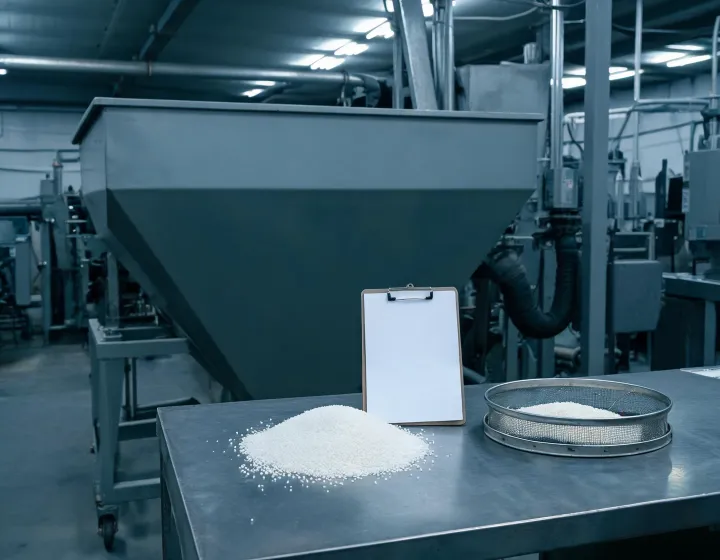
Some receiving plants specify prilled urea because their hopper and screen are set for that particle band. Others specify granular urea because blending equipment expects a different size distribution. Neither form is automatically “higher grade.” Record the requested form, or leave it open, and place any supplier alternative on a second line. Biuret and moisture limits are similarly process-specific; a fertilizer typical value is not a technical-grade CoA.
Agricultural literature is not a market-registration file
Crop or use notes help a mill understand intended application. They do not replace market-registration, labeling or destination-country questions that belong to the buyer’s regulatory reviewer. Ask the supplier which documents they can provide for the quoted SKU; do not treat a generic agrochemical brochure as registration evidence.
Trade-off we keep visible: tightening moisture, biuret and particle gates can reduce the number of mills able to quote, while leaving every field open can produce answers that cannot be compared. The desk records the buyer’s gates; it does not invent a “best” urea.