Buyer brief
The $11,400 Bulk Urea Order That Taught Me to Ask Better Questions
I Cancelled a Site Visit for a Quote That Looked Too Good
Summertime, 2019. I cancelled a site visit to our then-regular urea supplier because a trading company quoted us roughly $38 per metric ton less on a 500-metric-ton order. Do the math: about $19,000 in "savings." I sent the cancellation email without a second thought.
I'm a procurement manager handling bulk urea orders for eight years. I've personally made—and documented—six significant sourcing mistakes, totaling roughly $47,000 in wasted budget. Now I maintain our team's checklist to prevent others from repeating my errors. That August order became mistake number three.
Look, I get why the math seemed obvious. Every sourcing guide I'd read said the same thing: always get multiple quotes, let suppliers compete, drive the price down. Everything I'd read said price competition would surface the best deal. In practice, on that order, it surfaced the worst one.
What the Quote Didn't Show
The trading company's quote looked professional enough. Per-ton FOB pricing, minimum 500-metric-ton lot, standard packaging, 30-day delivery. I had the purchase order ready by Friday afternoon and my boss approved it without a second look — honestly, it looked like a routine buy compared to our other orders.
First thing that bothered me: week three, I called to check shipment progress and the person who answered asked for our delivery warehouse address, even though it was right there on the purchase order. I assumed internal miscommunication and sent the address again.
Second thing, worse: four days before the scheduled shipment, they emailed saying delivery would need "adjustment due to logistics reasons." No new date. No explanation. Just a vague "adjustment." It took me three phone calls to get a concrete answer: another two weeks.
Here's where I should have stopped. I should have called our original supplier and asked if they could take the order instead. Instead, I told myself to wait it out. It was still a good deal, supposedly.
The Container That Arrived Wrong
The shipment arrived two and a half weeks late. When they opened the container, my warehouse supervisor called me. His words: "Do you want me to reject this?"
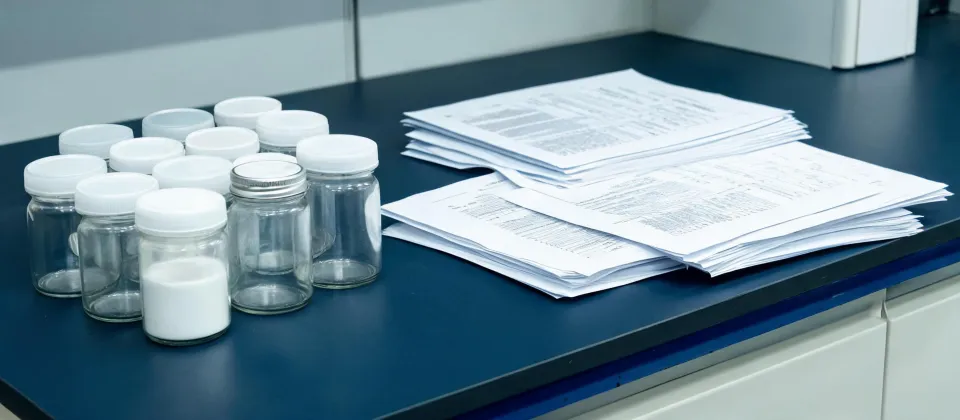
Moisture content was visibly off. The particle size distribution looked coarser than our regular urea bulk orders. Some of the bags were already tearing at the seams. I sent samples to the lab: nitrogen content below our contract specification, granular hardness noticeably lower than our regular supplier's batches.
It took me two full days of back-and-forth to get the trading company to acknowledge anything. They blamed "natural variation in transit" and offered a 3% discount on the total. A $3,000 credit against an $80,000 production loss. Our granulation line had to slow down significantly — cooling times were running long every shift — and three of our process engineers spent the better part of a week chasing the cascading issues.
What It Actually Cost
When I added it up later: the per-ton savings obviously never materialized. Lab re-testing fees, rejected material handling, the production delay on our line — it all came well past the $19,000 "savings."
That error cost $11,400 in rework, fees, and lost output, plus a 2-week production delay and a lot of explanation to management. It also meant my boss asked me "no new suppliers lately, right?" every Monday morning for the next three months.
The real kicker? Our original supplier later told me that if we had come directly to them, they could have matched about 85% of that price — because the trading company was simply taking a margin on top of their own network. We were paying for a middle layer we didn't need.
I'm not saying cheap is always wrong. I'm saying a low price without verifiable support behind it is a risk signal, not an opportunity. That distinction took me a while.
What I Do Differently Now
After that order, I built a five-step check. We've had two smaller near-misses since then, both caught by the list. It's currently on version four:
- The quote must include a particle size distribution range — not just "industrial grade"
- I ask for lab results from a verifiable third party within the last six months
- Cross-check with at least two alternative urea manufacturers or suppliers — if quoted prices differ by more than 15%, it triggers a deeper review
- First shipment of any size gets a pre-shipment sample inspection, even if it's just a video call
- The contract defines "logistics delay" precisely, including specific days before penalties kick in
Honestly, the checklist isn't bulletproof. Earlier this year we had a supplier with perfect-looking certifications that still delivered a batch slightly off spec. It happens. What the list does is filter out most of the problems — but not all. The industry keeps changing, and a checklist built purely from past mistakes will sometimes miss new ones.
How My Approach to Urea Supplier Sourcing Changed
I'm not saying traditional supplier relationships don't matter anymore. Quite the opposite. My longest-running urea supplier relationship is in year seven. Their quotes are rarely the lowest. But they send a simple photo record before every shipment — packaging, labeling, container loading. That visibility is worth more to me than a few dollars off the price sheet.
That said, the industry has shifted. Supplier matching platforms, online quote systems, third-party inspection services — these tools let us verify information faster now than I could five years ago. When I started, finding a new urea supplier basically meant phone calls, emails, and waiting for quotes with a huge information gap. Now most of the baseline verification can be done in a few hours. The question becomes whether you're willing to spend those hours.
I'm more willing now.
What I mean is that urea supplier sourcing done well isn't a price game at all. It's an information-verification game. Whoever has more truthful, more current information wins — not the person with the lowest quote on file.
One Thing I'd Tell My 2019 Self
If you're currently looking at urea supplier options — whether bulk urea for a long-term contract or a first trial order — here's what nobody told me: "sourcing" doesn't just mean finding the lowest price. It means finding the supplier who you can actually reach when something goes wrong.
My 2019 order's problem wasn't that I chose the wrong supplier. It was that I never actually verified what I was choosing.
The checklist is taped to the wall next to my desk. Five lines. Every time I'm tempted to skip one for a few dollars of margin, I remember that warehouse supervisor's phone call.
There's something satisfying about running a process that works — two years now without a major procurement failure on the urea side. Honestly, that feeling lasts longer than the few thousand dollars I thought I was saving back in August 2019.

Jane Smith
I’m Jane Smith, a senior content writer with over 15 years of experience in the packaging and printing industry. I specialize in writing about the latest trends, technologies, and best practices in packaging design, sustainability, and printing techniques. My goal is to help businesses understand complex printing processes and design solutions that enhance both product packaging and brand visibility.